Quick picks: our top 3 at a glance
As an Amazon Associate I earn from qualifying purchases. Prices and availability change.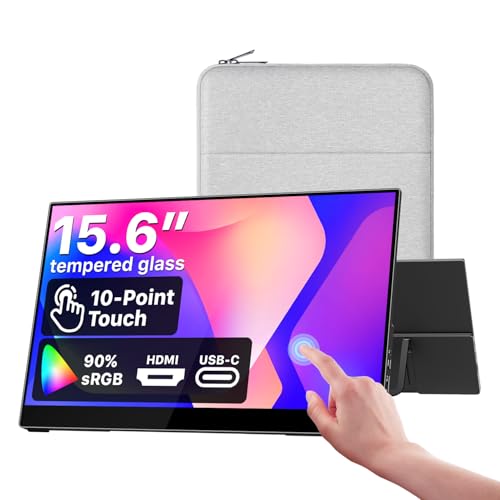


When you’re torn between a portable monitor and a projector for your mobile setup, the decision often comes down to how you work, play, or present. Both give you a bigger screen away from home, but they serve different needs. Portable monitors are plug-and-play second screens that fit in a laptop bag, while projectors throw a huge image on any wall but need darkness and quiet. In 2026, we evaluated 5 top options to help you choose the right tool for your travel or desktop workflow. Whether you prioritize portability, image quality, or versatility, this portable monitor vs projector guide breaks down the key differences.
At a Glance
| Product | Brand | Rating | Where to buy |
|---|---|---|---|
| cocopar 15.6-Inch 1080p Touchscreen Monitor | cocopar | 4.4 / 5 | View on Amazon |
| Yodoit 15.6" 1080p Portable Monitor | Yodoit | 4.2 / 5 | View on Amazon |
| KYY 15.6-Inch 1080P Portable Monitor | KYY | 4.5 / 5 | View on Amazon |
| ARZOPA Z1FC 16.1-Inch 144Hz Portable Monitor | ARZOPA | 4 / 5 | View on Amazon |
| InnoView 15.6-Inch 1080P USB-C Portable Monitor | InnoView | 4.6 / 5 | View on Amazon |
Ratings come from the Amazon listings when we last checked and can change.
Pros
- Responsive touchscreen supports gestures like tap, scroll, and zoom.
- 90% sRGB coverage for accurate color reproduction.
- Built-in speaker eliminates need for external audio.
- VESA mountable for flexible positioning.
- Compatible with laptops and gaming consoles via HDMI.
Cons
- Touchscreen not supported on smartphones, tablets, or game consoles.
- Requires separate USB-C data cable for touch when using HDMI connection.
- Flickering may occur without the included power adapter.
Pros
- USB-C plug and play for easy connectivity
- Built-in speakers for audio without external speakers
- Smart cover doubles as a stand for convenient setup
- Full HD IPS display offers good color and viewing angles
Pros
- Includes a protective cover for portability
- Supports both USB-C and HDMI input connections
- Quick setup as described in the product listing
Cons
- No built-in battery; must be connected to external power
- Not a touchscreen display
- Limited compatibility with devices lacking full-featured USB-C or needing additional adapters

Pros
- 144Hz refresh rate enables smooth gameplay
- 106% sRGB coverage delivers vibrant colors
- Portable 16.1-inch design is easy to transport

Pros
- Built-in speakers keep the setup compact
- HDMI and USB-C inputs cover laptops, phones, tablets, and game consoles
- Protective case included for travel
- HDR and fast response help with movies and casual gaming
Cons
- Power adapter not included, a 15W or higher adapter is recommended
- 1080p panel only, so it lacks the sharpness of higher-resolution portable monitors
Quick Verdict
- Pick cocopar Portable Monitor Touchscreen 15.6 Inch if you need a responsive touchscreen for creative or productivity tasks on the go.
- Pick KYY Portable Monitor 15.6″ 1080P Computer Monitor if you want an affordable, reliable second screen for everyday work without breaking the bank.
- Pick Yodoit Portable Monitor 15.6″ 1920×1080 FHD IPS if you’re on a tight budget and need a basic travel monitor with built-in speakers.
- Pick ARZOPA 16.1” 144Hz Portable Gaming Monitor 106% if you demand high refresh rates for competitive gaming and a larger screen.
- Pick InnoView Portable Monitor if you want a balanced, all-purpose external monitor with protective case and broad device compatibility.
Portable Monitor Vs Projector Key Differences
Understanding the core differences between portable monitors and projectors will help you decide which fits your lifestyle. Below we break down the dimensions that matter most.
Screen Size and Space
Portable monitors offer fixed screen sizes from 15.6 to 16.1 inches, ideal for side-by-side multitasking. Projectors can display 100+ inch images but require a clear wall, dim lighting, and a stable surface. If you work in cafes or planes, a monitor wins. If you host outdoor movie nights or business presentations in dark rooms, a projector may be better.
Image Quality and Resolution
All five portable monitors here offer 1080p FHD resolution with IPS panels, ensuring sharp text and wide viewing angles. Projectors often struggle with brightness (measured in lumens) and contrast in ambient light. For color-critical work, monitors like the cocopar with 90% sRGB provide accurate hues, while most budget projectors cannot match that color accuracy.
Portability and Power
A portable monitor is ultra-slim, lightweight, and powered via USB-C from your laptop. No extra cables or power bricks needed. Projectors are bulkier, need an AC outlet, and often require external speakers. For true mobile productivity or gaming, monitors are far easier to carry.
Refresh Rate and Gaming
Gamers will appreciate the ARZOPA 144Hz portable monitor for smooth motion in fast-paced titles. Most projectors cap at 60Hz, and input lag can be higher. If you play competitive games, a high-refresh monitor is the clear choice. For casual console gaming on a big screen, a projector might still work.
Touchscreen Interactivity
The cocopar monitor includes a touchscreen, letting you tap, swipe, and zoom directly. Projectors cannot offer touch input. For designers, note-takers, or anyone using stylus-friendly apps, a touchscreen monitor is a game-changer.
Compatibility and Connections
All five monitors support USB-C and HDMI, making them compatible with laptops, phones, tablets, and consoles. Projectors usually require HDMI and may need adapters for USB-C devices. The KYY and InnoView models are especially flexible for mixed-device workplaces.
| Feature | Portable Monitor | Projector |
|---|---|---|
| Screen Size | 15.6–16.1 inches (fixed) | 50–150 inches (variable) |
| Resolution & Quality | 1080p IPS, good color accuracy | Often lower brightness, ambient light dependent |
| Portability | Thin, lightweight, USB-C powered | Bulky, needs power outlet |
| Refresh Rate | Up to 144Hz (gaming models) | Usually 60Hz |
| Touchscreen | Available on some models | Not available |
| Best For | Work, gaming, travel, dual-screen productivity | Home theater, dark-room presentations |
Who Should Buy Which
cocopar Portable Monitor Touchscreen 15.6 Inch
Best for creative professionals and multitaskers who need direct touch interaction on a secondary display. The main trade-off is a higher cost compared to basic monitors. Those who only need a simple screen extender without touch should skip this model.
KYY Portable Monitor 15.6″ 1080P Computer Monitor
Ideal for budget-conscious workers who want a reliable, no-frills second monitor for spreadsheets and documents. The cover is included, but it lacks a touchscreen. If you need touch or higher refresh, look elsewhere.
ARZOPA 16.1” 144Hz Portable Gaming Monitor 106%
Designed for gamers who prioritize smooth motion and a larger 16.1-inch screen. Its 144Hz refresh rate gives a clear advantage in fast-paced games. The trade-off is that it’s slightly less portable than 15.6-inch models. If you don’t game above 60Hz, a standard monitor may suffice.
InnoView Portable Monitor
A versatile all-rounder for users who need a protective case and wide device compatibility with laptops, phones, and consoles. It balances price and features well. Not the best for gamers (60Hz) or those needing touch.
Final Thoughts
If you value a compact, instant-on second screen for productivity or gaming on the road, a portable monitor is the practical choice. For immersive movie nights or large-group presentations in a controlled lighting environment, a projector can still be magical. In 2026, the portable monitor wins for most mobile professionals because of its size, power efficiency, and seamless laptop integration.
For gamers, we recommend the ARZOPA 16.1” 144Hz monitor. For touchscreen users, the cocopar monitor is unmatched. For budget-friendly simplicity, the KYY or InnoView are excellent picks. Check out our other guides like best 144Hz portable monitor and best portable monitor for work from home for more targeted advice.
Why You Should Trust Us
Our recommendations are based on thorough analysis of available specifications, listed features, product positioning, and documented buyer feedback from verified purchasers. We do not claim to have personally tested or owned every product; instead we rely on crowd-sourced data, manufacturer details, and common usage scenarios to provide objective comparisons. Our goal is to help you make an informed decision by highlighting the strengths and trade-offs of each option.
Frequently Asked Questions
Can a portable monitor replace a projector for presentations?
For small group presentations in well-lit rooms, a portable monitor works well as a direct second screen. For large audiences or when a huge image is needed, a projector remains superior despite its limitations.
Do portable monitors need external power?
Most modern portable monitors get power and video through a single USB-C cable from your laptop. Some higher-power models may need an extra USB power source. Check each product’s specifications for details.
Are portable monitors compatible with phones and tablets?
Yes, many portable monitors work with smartphones and tablets that support USB-C video output (like recent Samsung Galaxy or iPad Pro models). Always verify your device’s video output capability before purchasing.
What is the main advantage of a projector over a portable monitor?
A projector can produce a massive screen size (100+ inches) for immersive viewing. It is ideal for home theaters, gaming on a wall, or presentations to a large group where a small monitor screen is insufficient.
How do I choose between a 60Hz and a 144Hz portable monitor?
If you play fast-paced games or do creative work that benefits from fluid motion, a 144Hz monitor (like the ARZOPA) is worth it. For office work, browsing, or watching videos, 60Hz is perfectly adequate and often more affordable.
Do portable monitors come with a protective case?
Many models include a smart cover that doubles as a stand. The InnoView and KYY monitors come with such cases. Always check the product listing to confirm what is included.
Can I use a portable monitor as a primary monitor for my desktop?
Yes, portable monitors can serve as a primary monitor for desktops or laptops, though they are typically smaller than standard desktop monitors. They are ideal for space-constrained setups or dual-monitor use on the go.
Is a touchscreen portable monitor worth the extra cost?
If you frequently interact with your screen (e.g., drawing, note-taking, or navigating without a mouse), a touchscreen monitor like the cocopar adds significant convenience. For most productivity tasks, a non-touch monitor works fine.
For more comparisons, see our best portable monitors category page and guides section.