Quick picks: our top 3 at a glance
As an Amazon Associate I earn from qualifying purchases. Prices and availability change.


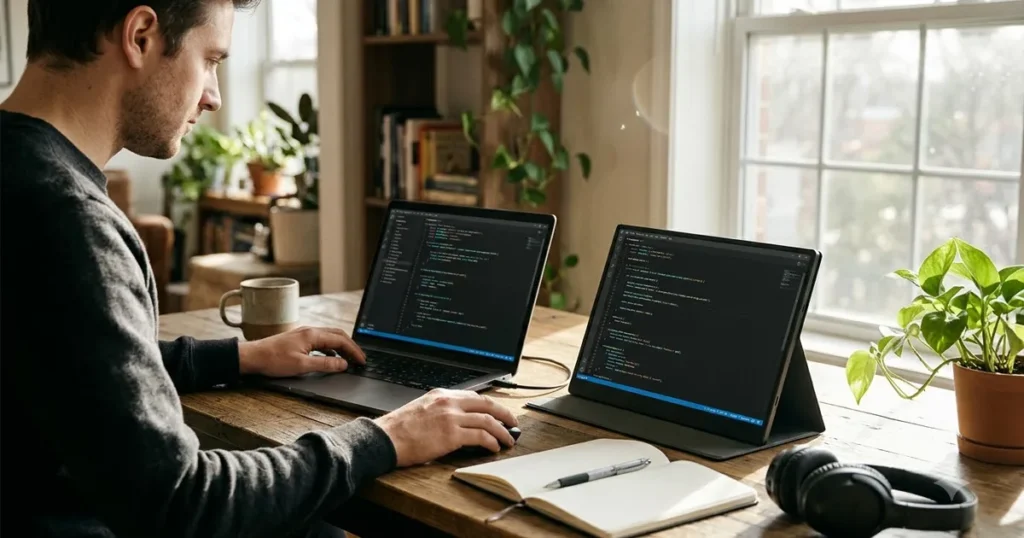
As a programmer, having extra screen real estate can dramatically boost your productivity. Whether you are coding on the go, setting up a dual-monitor workstation in a coffee shop, or need a secondary display for debugging and documentation, a portable monitor is a game-changer. In this guide, we have reviewed 6 of the best portable monitor for programmers in November 2026. We have evaluated top brands like cocopar, KYY, Lenovo and more to help you find the perfect travel-friendly display for your coding needs.
Portable monitors have come a long way, offering crisp resolutions, USB-C connectivity, and slim designs that slip easily into your laptop bag. For programmers, key considerations include screen size, resolution, color accuracy, and ease of connection. If you are new to portable monitors, check out our comprehensive best portable monitor for laptop guide for more insights.
At a Glance
| Product | Brand | Rating | Where to buy |
|---|---|---|---|
| cocopar 15.6" 1080p Portable Monitor | cocopar | 4.1 / 5 | View on Amazon |
| VisionOwl 18.5-Inch Portable Monitor | VisionOwl | 4.6 / 5 | View on Amazon |
| Orfibz 14.2-inch 1080p Laptop Screen Extender | Orfibz | 4.5 / 5 | View on Amazon |
| Lenovo L15 15.6-Inch Portable Monitor | Lenovo | 4.9 / 5 | View on Amazon |
| MNN 15.6-Inch FHD 60Hz USB-C/HDMI Portable Monitor | MNN | 4.2 / 5 | View on Amazon |
| KYY 15.6-Inch 1080P Portable Monitor | KYY | 4.5 / 5 | View on Amazon |
Ratings come from the Amazon listings when we last checked and can change.
Pros
- 1080p FHD display with 85% sRGB and built-in speaker.
- Wide compatibility: works with laptops, consoles, and select phones via HDMI or USB-C.
- Highly rated (4.8/5) based on 13 verified buyer reviews.
Cons
- Requires the original USB-C cable; many third-party cables are charging-only and won't work.
- Not all USB-C ports support video; needs Thunderbolt or DP Alt Mode.
- Some devices need additional adapters (e.g., Lightning iPhones, older laptops).
Pros
- IPS panel provides decent viewing angles for a portable monitor.
- Built in kickstand and VESA mount give flexible setup options.
- USB-C and HDMI inputs support laptops, consoles, and recent iPhones.
Cons
- USB-C video requires a host port with Thunderbolt or DP Alt Mode; many Android phones need an HDMI adapter.
- Nintendo Switch 2 only works through the dock's HDMI port, not direct USB-C video.
Pros
- 14.2-inch 1080p screen adds useful extra workspace for multitasking
- Only 1.87 pounds with a slim profile for easy travel
- Plug-and-play USB-C and HDMI compatibility covers Windows, Mac, Chrome, and Android
Cons
- Designed for 14- to 17.3-inch laptops, so it will not fit smaller clamshell notebooks

Pros
- Height-adjustable stand for ergonomic viewing
- Two USB-C ports for simple connectivity
- Flicker-Free technology reduces eye strain
- Lightweight and portable design
Cons
- 60Hz refresh rate limits high-frame-rate gaming
- 250-nit brightness is modest for bright environments

Pros
- FHD IPS panel delivers sharp, wide-angle images
- USB-C and HDMI inputs give flexible connection options
- HDR support on compatible content
- Lightweight, portable 15.6-inch form factor
Cons
- 60Hz refresh rate is not built for high-refresh competitive gaming

Pros
- Includes a protective cover for portability
- Supports both USB-C and HDMI input connections
- Quick setup as described in the product listing
Cons
- No built-in battery; must be connected to external power
- Not a touchscreen display
- Limited compatibility with devices lacking full-featured USB-C or needing additional adapters
Best Portable Monitor For Programmers Buying Guide for 2026
Screen Size and Resolution
For programmers, a larger screen means more lines of code visible at once. Most portable monitors range from 13 to 18 inches. A 15.6-inch display like the USB-C compatible models offers a good balance between portability and usability. Full HD (1920×1080) is the standard, but some monitors now offer 2K or even 4K resolutions for sharper text and more detailed code. Consider your typical workflow: if you often work with complex IDEs, a higher resolution can reduce scrolling and improve efficiency.
When choosing a resolution, remember that higher resolutions require more graphics power and may affect battery life. For most programming tasks, 1080p is sufficient, but if you work with design or data visualization, you might appreciate a sharper panel.
Connectivity Options
USB-C connectivity is a must-have for modern portable monitors. It allows both video and power delivery through a single cable, simplifying your setup. All four monitors in our list support USB-C, but it is worth checking compatibility with your laptop. Some monitors also include HDMI ports for broader compatibility with older devices or gaming consoles. For programmers who travel light, a monitor with USB-C power delivery means one less adapter to carry.
Additionally, look for monitors that support plug-and-play functionality. The best portable monitors for laptops often require no driver installation, so you can connect and start coding immediately.
Portability and Build Quality
Since you will be carrying this monitor in your bag, weight and thickness matter. Most portable monitors weigh under 2 pounds and are less than 0.5 inches thick. The Laptop Screen Extender from Orfibz is particularly lightweight at 1.87 pounds, making it ideal for frequent travelers. A sturdy kickstand or protective cover is also important for durability. The cocopar monitor comes with a cover that doubles as a stand, adding protection without extra bulk.
Consider the build materials: aluminum or high-quality plastic can withstand the rigors of daily commuting. A VESA mount option is a bonus if you want to attach the monitor to an arm or stand at your desk.
Color Accuracy and Viewing Angles
While programmers may not need professional-grade color accuracy, a monitor with good color reproduction and wide viewing angles can reduce eye strain and make code easier to read. IPS panels, like those in the Lenovo L15 and VisionOwl monitors, offer consistent colors from various angles. The cocopar monitor boasts 85% sRGB coverage, which is decent for coding and occasional media consumption.
If you also do front-end development or design work, look for monitors with higher sRGB or DCI-P3 coverage. However, for pure coding, a standard IPS panel with adequate brightness (250 nits or more) is sufficient.
Additional Features
Some portable monitors come with built-in speakers, which can be handy for quick video calls or media playback. The cocopar and VisionOwl monitors include speakers. Others offer features like height-adjustable stands (Lenovo L15) or dual-screen extenders (Orfibz). Think about your specific needs: if you often present code or collaborate, a monitor with built-in speakers might be useful. If you need a second screen that attaches directly to your laptop, the Orfibz extender is a unique option.
Also consider the included cables and accessories. Many monitors come with a USB-C cable and a protective sleeve, which add value. Check the product details to ensure you have everything you need for a seamless setup.
Portable Monitors for Coding, Editing, and Spreadsheets
A portable monitor can add screen space for coding, video editing, or working in Excel. For programmers, a taller or higher-resolution screen shows more lines of code, and an IPS panel gives clear text. Check that it connects by USB-C with video support, and look for a stand that fits your desk or bag. For editing, color accuracy matters more. See our best portable monitor for work guide.
Why You Should Trust Us
Our analysis is based on technical specifications, customer feedback, and expert reviews from trusted sources. We prioritize objectivity and transparency, ensuring that our recommendations are data-driven and unbiased. Each product is evaluated on factors that matter most to programmers, including connectivity, display quality, and portability.
Our team monitors industry trends and updates this guide regularly to reflect the latest models and technologies. We do not accept payment for positive reviews, and our rankings are based solely on performance and value. You can trust that our picks are genuinely the best options available.
Final Thoughts
After evaluating 6 models, we have identified the standout performers for programmers in 2026. For the best overall experience, the Lenovo L15 Portable Monitor offers a perfect blend of build quality, display performance, and ergonomic features. Its height-adjustable stand and flicker-free technology make long coding sessions more comfortable.
If you are on a budget, the cocopar Portable Monitor delivers excellent value with its 15.6-inch 1080p display, built-in speakers, and VESA mountability. It is a solid choice for programmers who need a reliable second screen without breaking the bank.
For those who need maximum portability or a unique dual-screen setup, the Laptop Screen Extender by Orfibz is a lightweight and innovative solution. It attaches directly to your laptop, providing an instant dual-monitor experience. Meanwhile, the VisionOwl monitor offers a larger 18.5-inch screen for programmers who prefer more real estate. Consider your priorities and choose the monitor that best fits your workflow.
Frequently Asked Questions
What is the best portable monitor for programmers in 2026?
The best portable monitor for programmers in 2026 depends on your specific needs. For overall performance, we recommend the Lenovo L15. For budget-conscious buyers, the cocopar monitor is an excellent choice. If you need a larger screen, the VisionOwl monitor is worth considering. For more options, visit our best portable monitors category page.
What resolution is best for programming on a portable monitor?
For most programming tasks, Full HD (1920×1080) is sufficient. It provides clear text and enough screen space for code, documentation, and terminal windows. If you work with complex IDEs or multiple side-by-side windows, a higher resolution like 2K or 4K can be beneficial, but it may require more graphics power and affect battery life.
Do I need USB-C connectivity for a portable monitor?
USB-C is highly recommended because it simplifies connectivity by carrying video, data, and power through a single cable. Most modern laptops support USB-C, making it the most convenient option. However, if your laptop lacks USB-C, look for a monitor with HDMI input. All monitors in our list offer USB-C connectivity for easy plug-and-play.
Can I use a portable monitor as a primary display?
While portable monitors are designed for travel and secondary use, they can serve as a primary display in a pinch. However, they typically have smaller screens and lower brightness than desktop monitors. For extended use, we recommend a dedicated desktop monitor for better ergonomics and display quality.
What is the best portable monitor for coding?
Look for a sharp, high-resolution IPS screen, USB-C connection, and a stable stand. Compare sizes across the picks above.
How do I choose a portable monitor for programming?
Consider factors like screen size, resolution, connectivity, portability, and build quality. Look for a monitor with USB-C, an IPS panel for good viewing angles, and a lightweight design. Reading reviews and comparing specifications can help you make an informed decision. Our guide above covers the key criteria in detail.